


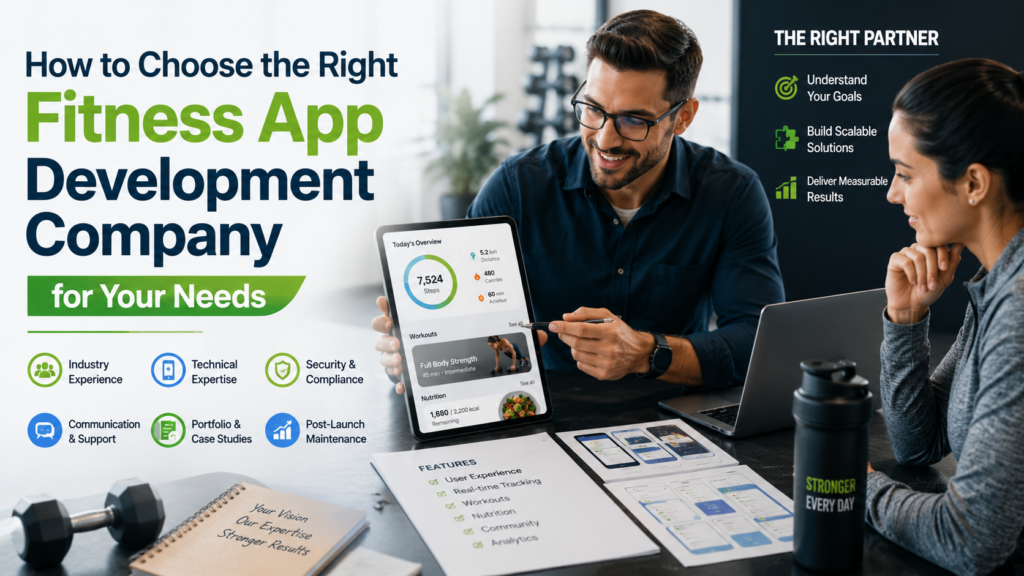
The fitness industry has changed dramatically over the past few years. People now expect personalized workout plans, wearable device integration, nutrition tracking, virtual coaching, and real time progress monitoring, all from a single mobile application. As demand continues to grow, businesses, startups, gyms, and healthcare providers are investing in digital fitness solutions to stay competitive.
However, building a successful fitness app requires much more than a good idea. The development partner you choose can determine whether your application becomes a trusted product or struggles to gain users. Working with the right Fitness App Development comapny means gaining access to technical expertise, industry knowledge, and a team that understands both user experience and business objectives.
This guide explains the key factors you should evaluate before selecting a development partner, helping you make an informed decision that supports your long term goals.
Why Choosing the Right Development Partner Matters
A fitness application is more than a collection of screens. It combines multiple technologies to deliver an engaging user experience while maintaining security and reliability.
Modern fitness apps often include features such as:
- Activity tracking
- Workout scheduling
- AI powered recommendations
- Wearable device integration
- Live video sessions
- Nutrition management
- Community engagement
- Subscription management
- Secure payment gateways
Each feature requires careful planning, scalable architecture, and continuous optimisation. Choosing an experienced development company reduces technical risks and improves the chances of launching a successful product.
Understand Your Business Goals First
Before contacting development agencies, define exactly what you want your application to accomplish.
Ask yourself:
- Who is your target audience?
- What problems does your app solve?
- Will it focus on workouts, nutrition, wellness, meditation, or personal coaching?
- Will it generate revenue through subscriptions, advertisements, or premium memberships?
- Do you need both Android and iOS applications?
Having clear answers allows developers to recommend suitable technologies instead of making assumptions.
Look for Experience in Fitness App Development
Not every software company has experience building health and fitness products.
Review their previous work carefully. An experienced company should understand common industry requirements, including:
- Workout tracking
- Health metrics
- GPS based running
- Integration with Apple Health
- Google Fit compatibility
- Wearable devices
- Smartwatch support
- Video streaming
- Progress analytics
Companies that have already solved these challenges can often deliver faster and with fewer development risks.
Evaluate Their Portfolio
A portfolio provides valuable insight into a company’s technical abilities and design standards.
Look for projects that demonstrate:
- Clean user interface
- Smooth navigation
- Fast loading performance
- Modern visual design
- Real user engagement
- Innovative features
Instead of simply checking screenshots, download published apps whenever possible. Testing the user experience yourself provides a much clearer picture of development quality.
Check Client Reviews and Testimonials
Independent reviews often reveal information that sales presentations do not.
Read feedback on platforms such as:
- Clutch
- GoodFirms
- DesignRush
- Google Reviews
Pay attention to comments about:
- Communication
- Delivery timelines
- Project management
- Technical support
- Post launch maintenance
Consistently positive reviews usually indicate a reliable development partner.
Assess Their Technical Expertise
Technology evolves quickly, especially within mobile development.
A capable development team should have experience with:
- Flutter
- React Native
- Swift
- Kotlin
- Node.js
- Python
- Firebase
- AWS
- Microsoft Azure
- Google Cloud Platform
Ask how they approach scalability, security, and future updates. A modern technology stack ensures your application remains competitive as your user base grows.
Prioritise User Experience
Even powerful features cannot compensate for poor usability.
Fitness users expect applications that are:
- Easy to navigate
- Visually appealing
- Responsive
- Fast
- Accessible
- Simple to understand
A development company should have experienced UI and UX designers who create interfaces that encourage long term user engagement.
Good design increases retention and improves customer satisfaction.
Ensure Strong Data Security
Fitness applications collect sensitive personal information, including:
- Health records
- Exercise history
- Personal profiles
- Payment details
- Location data
Your development partner should implement security best practices such as:
- End to end encryption
- Secure authentication
- Multi factor authentication
- Regular security testing
- Secure APIs
- GDPR compliance where applicable
- HIPAA awareness for healthcare related solutions
Strong security builds user trust and protects your business reputation.
Ask About AI and Smart Features
Artificial intelligence has become an important part of modern fitness platforms.
Many successful applications now provide:
- Personalised workout recommendations
- Adaptive training plans
- Nutrition suggestions
- Behaviour analysis
- Progress predictions
- AI powered virtual coaching
An experienced development company can help identify practical AI features that genuinely improve user experience instead of adding unnecessary complexity.
Verify Their Development Process
A structured development process keeps projects organised and reduces delays.
Ask how they manage:
- Discovery sessions
- Wireframing
- UI design
- Development
- Testing
- Deployment
- Maintenance
Companies using Agile methodologies typically provide better visibility throughout the project through regular progress updates and iterative improvements.
Understand Communication Practices
Clear communication often determines project success.
Before signing any agreement, ask:
- Who will manage the project?
- How frequently will meetings occur?
- Which communication tools are used?
- How are issues reported?
- How quickly do they respond?
A dedicated project manager can significantly improve collaboration throughout development.
Consider Scalability
Your application may begin with a few hundred users but eventually grow to hundreds of thousands.
The chosen development company should build an architecture capable of supporting:
- Increased traffic
- Additional features
- International expansion
- Multiple languages
- Cloud infrastructure
- Performance optimisation
Planning for growth early prevents expensive redevelopment later.
Discuss Maintenance and Support
Launching the app is only the beginning.
Continuous maintenance includes:
- Bug fixes
- Operating system updates
- Performance improvements
- Security patches
- Feature enhancements
- Server monitoring
Choose a company that offers long term technical support instead of ending the relationship immediately after launch.
Compare Value Instead of Price
Selecting the cheapest proposal often leads to higher costs later due to poor code quality, missed deadlines, or frequent maintenance issues.
Instead, compare:
- Experience
- Technical capabilities
- Industry expertise
- Communication
- Development methodology
- Support services
- Overall value
When evaluating proposals, remember that fitness app development cost depends on factors such as feature complexity, platform selection, third party integrations, design requirements, backend infrastructure, and ongoing maintenance rather than a single fixed price.
Questions to Ask Before Hiring
Before making your final decision, ask prospective companies:
- Have you developed fitness or healthcare applications before?
- Can you share live app examples?
- Which technologies do you recommend?
- How do you ensure application security?
- What is your quality assurance process?
- How do you manage project communication?
- Do you provide post launch support?
- Can the application scale as the business grows?
- What integrations do you recommend for wearable devices?
- How do you handle future feature updates?
Their responses will help you compare expertise beyond marketing claims.
Common Mistakes to Avoid
Many businesses make avoidable mistakes during the hiring process.
Some of the most common include:
- Choosing based only on price
- Ignoring client reviews
- Skipping portfolio evaluation
- Overlooking communication quality
- Failing to discuss maintenance
- Not defining project goals
- Ignoring scalability requirements
- Selecting agencies without relevant industry experience
Avoiding these mistakes can save considerable time and investment.
Final Thoughts
Choosing the right development partner is one of the most important decisions you’ll make when launching a digital fitness product. A capable team does more than write code. They help shape your product strategy, recommend the right technologies, improve user experience, and support long term business growth.
Take time to research portfolios, verify technical expertise, assess communication practices, and understand their development process before making your decision. A thoughtful selection process increases the likelihood of building a secure, scalable, and engaging fitness application that delivers lasting value to both your business and your users.